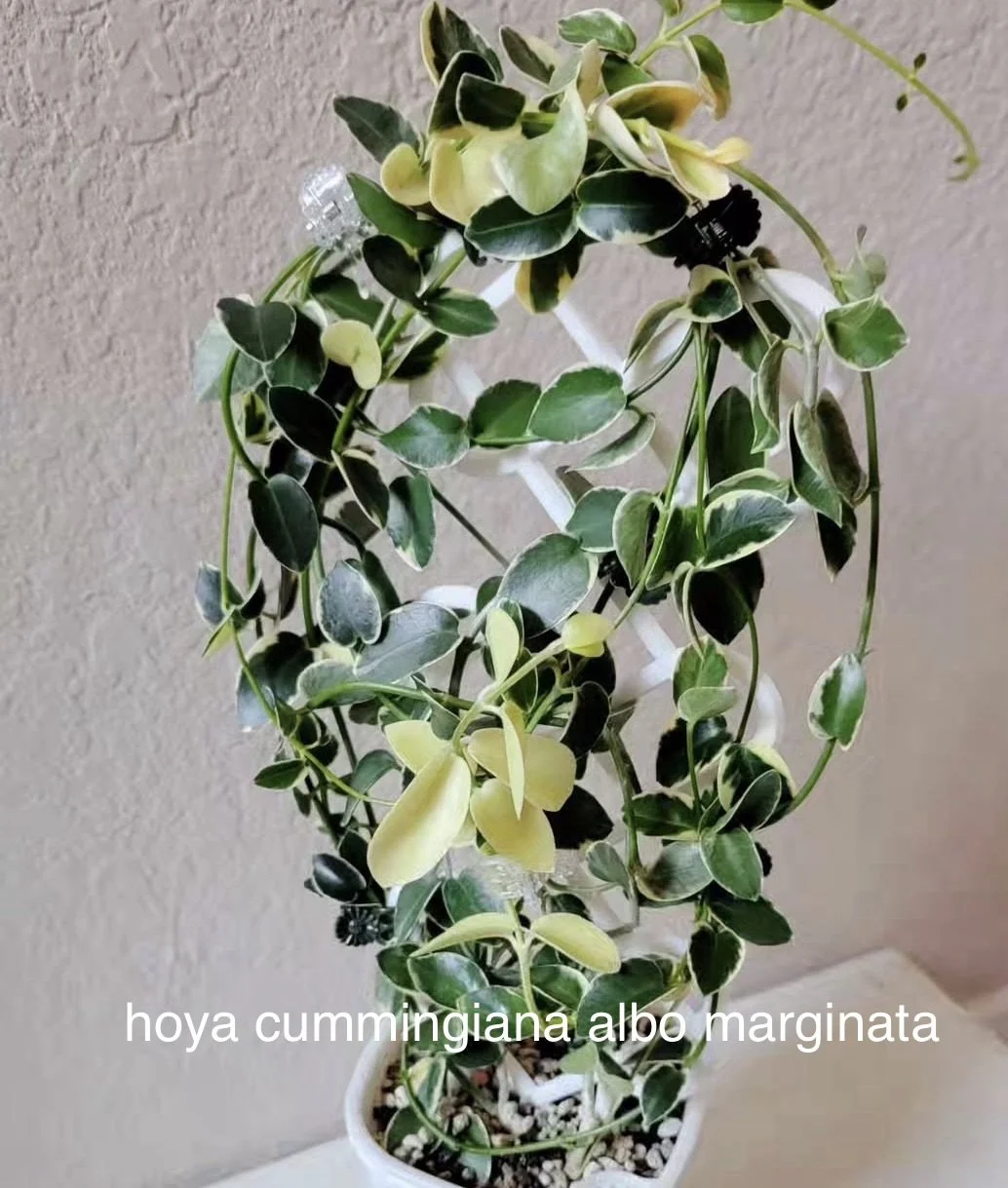
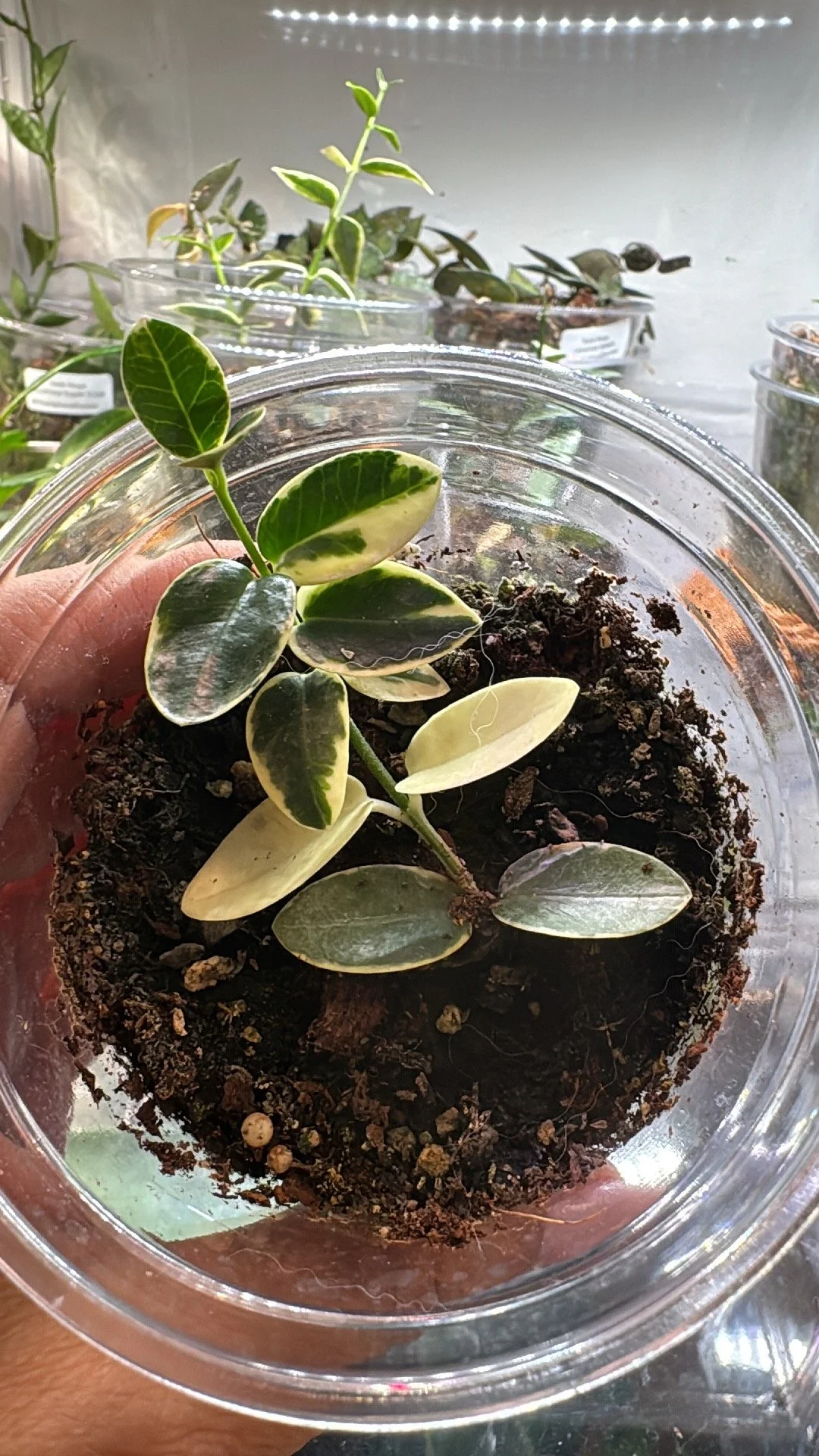
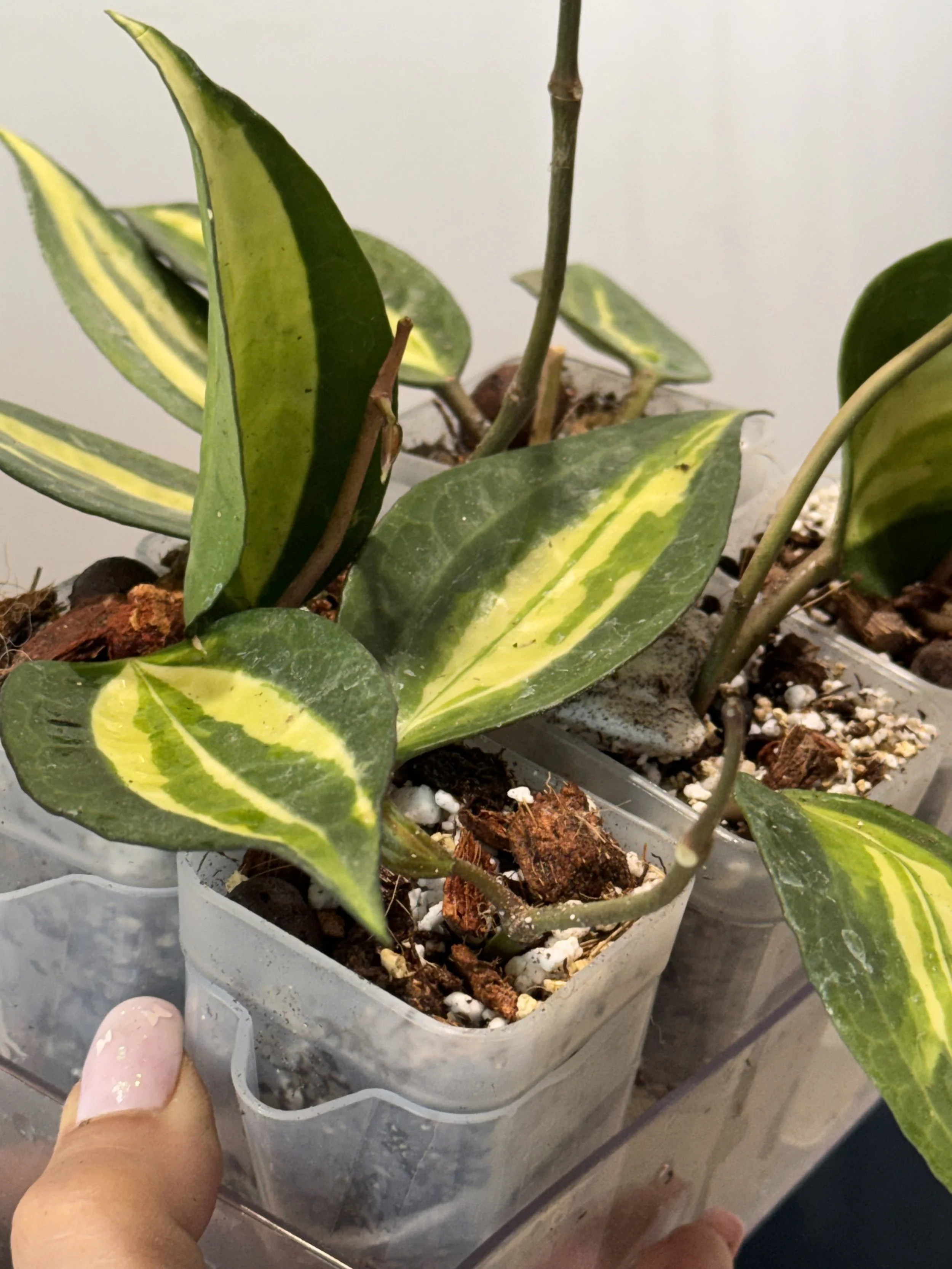
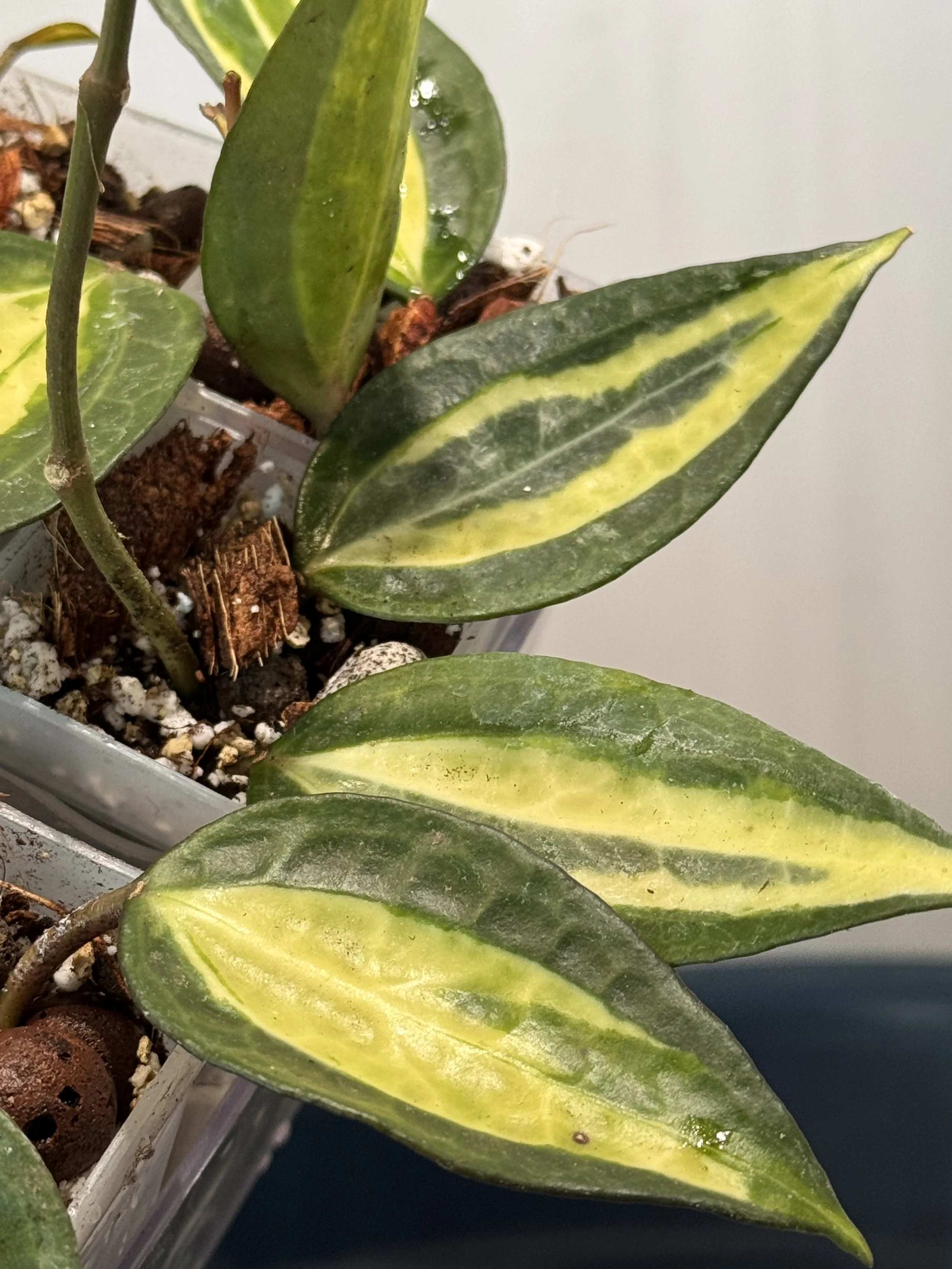
Hoya Anncajanoae
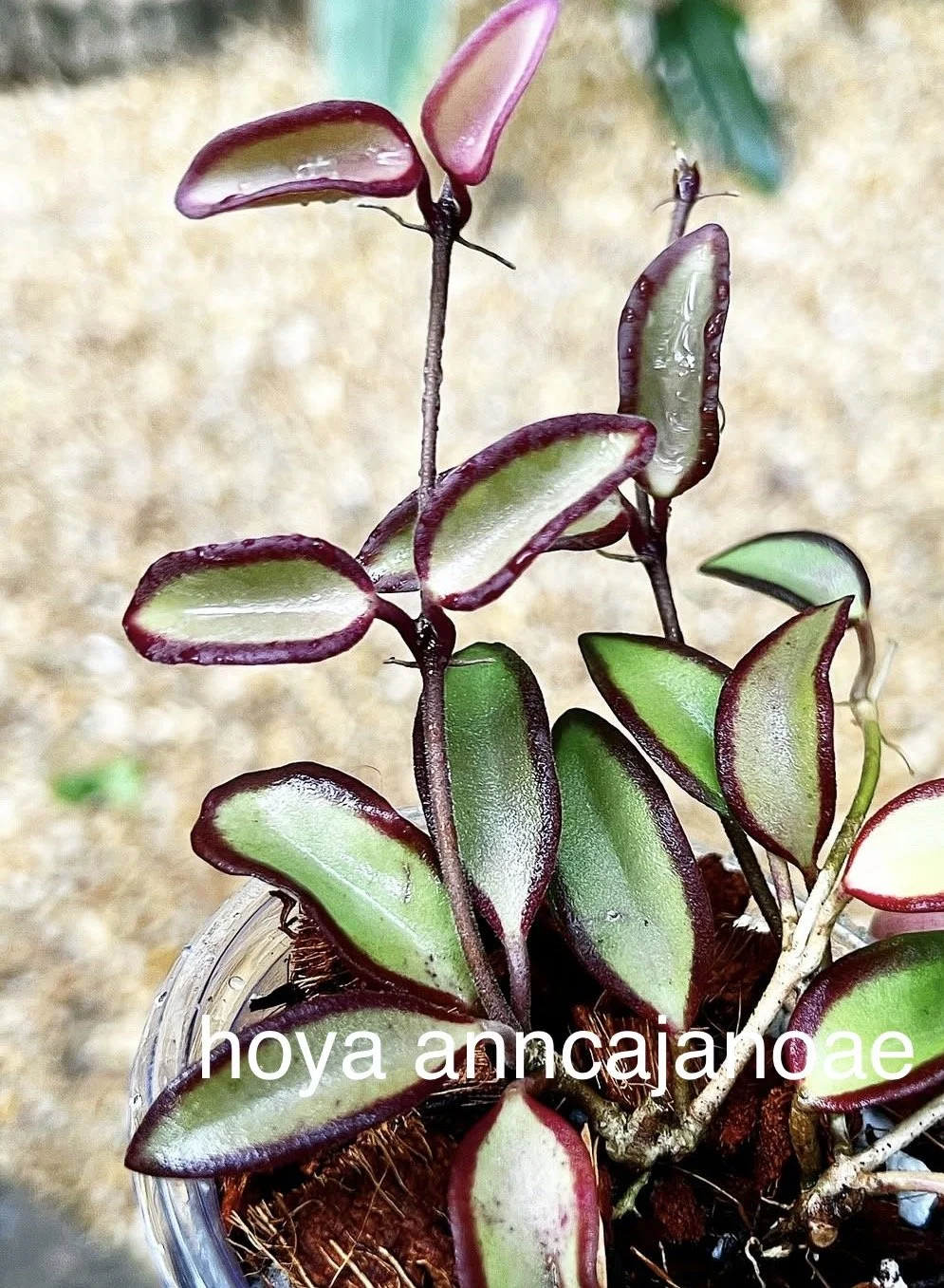
Hoya Anncajanoae
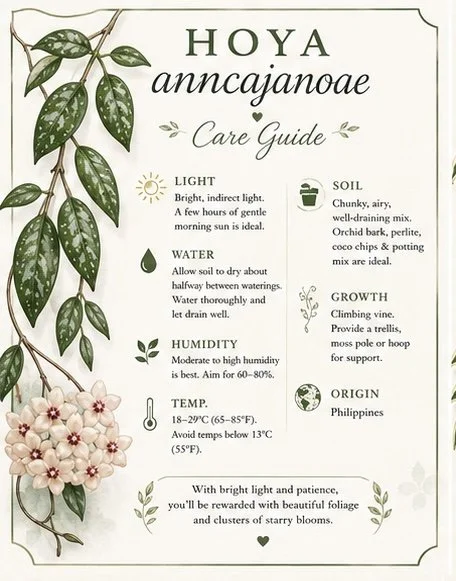
Hoya anncajanoae Care Guide
A Rare Jewel for the Hoya Collector
If you’re looking for a Hoya that feels truly special, Hoya anncajanoae is one of those hidden gems that quickly captures the hearts of collectors. With its attractive foliage, delicate clusters of star-shaped flowers, and naturally epiphytic growth habit, this species is both rewarding and fascinating to grow.
Native to the tropical forests of the Philippines, Hoya anncajanoae grows as an epiphyte, meaning it naturally lives attached to tree branches rather than rooted in the ground. High in the forest canopy, its roots cling to bark where they receive excellent airflow, frequent rain showers, and bright filtered light beneath the jungle canopy. These natural growing conditions are the key to understanding how to keep this beautiful species thriving indoors.
Unlike many traditional houseplants, Hoyas prefer to dry slightly between waterings and appreciate airy growing conditions around both their roots and foliage. When given the right environment, Hoya anncajanoae becomes an easy-going plant that rewards patient growers with vigorous vines and beautiful blooms.
Light
Provide bright, indirect light throughout the day. A location near an east-facing window is ideal, while a south or west window should be filtered with a sheer curtain if the afternoon sun is intense.
A few hours of gentle morning sun encourages stronger growth and flowering, but avoid prolonged harsh afternoon sunlight, which may scorch the leaves.
Watering
Allow the potting mix to become partially dry before watering again. Water thoroughly until excess water drains from the bottom of the pot, then allow the soil to drain completely.
Like many epiphytic Hoyas, Hoya anncajanoae dislikes sitting in constantly wet soil. During winter, reduce watering as growth naturally slows.
Soil
A loose, chunky, well-draining mix is essential.
A good mix may include:
Orchid bark
Perlite or pumice
Coco husk or coco chips
High-quality potting mix
Charcoal (optional)
The goal is to provide excellent airflow around the roots while still retaining a small amount of moisture.
Humidity
This species appreciates moderate to high humidity, ideally between 60–80%. While it can adapt to average household humidity, higher humidity often encourages larger leaves, healthier growth, and improved flowering.
A greenhouse cabinet or humid room can help this species truly flourish.
Temperature
Hoya anncajanoae prefers warm temperatures between 18–29°C (65–85°F).
Protect it from cold drafts and avoid temperatures below 13°C (55°F) for extended periods.
Fertilizer
Feed monthly during active growth using a balanced liquid fertilizer diluted to half strength.
During spring and summer, regular feeding encourages vigorous vines and increases the likelihood of flowering.
Support
As a natural climbing vine, Hoya anncajanoae benefits from a trellis, moss pole, or hoop support.
Allowing the vines to climb often produces larger leaves and a more mature growth habit, although trailing vines are equally attractive.
Repotting
Hoyas generally enjoy being slightly root-bound. Repot only when the roots have filled the pot, usually every two to three years.
Choose a pot only one size larger than the current container to prevent excess moisture from remaining around the roots.
Flowering
With consistent bright light, proper watering, and patience, Hoya anncajanoae produces charming clusters of waxy, star-shaped flowers.
Avoid removing old flower spurs (peduncles), as Hoyas bloom repeatedly from the same spurs year after year.
Common Problems
Yellow leaves
Usually caused by overwatering or poor drainage.
Wrinkled leaves
Often indicate the plant is thirsty or has damaged roots preventing water uptake.
Slow growth
Typically caused by insufficient light, cool temperatures, or lack of fertilizer during the growing season.
Bud drop
May occur if the plant is moved while in bud, experiences sudden temperature changes, or dries out excessively.
Hoya anncajanoae is a wonderful species that combines the beauty of tropical rainforest plants with the easy-going nature that makes Hoyas so beloved among collectors. By recreating its natural habitat with bright filtered light, airy roots, warm temperatures, and careful watering, you’ll be rewarded with healthy vines, beautiful foliage, and eventually the spectacular blooms that make this rare Philippine native such a treasure.