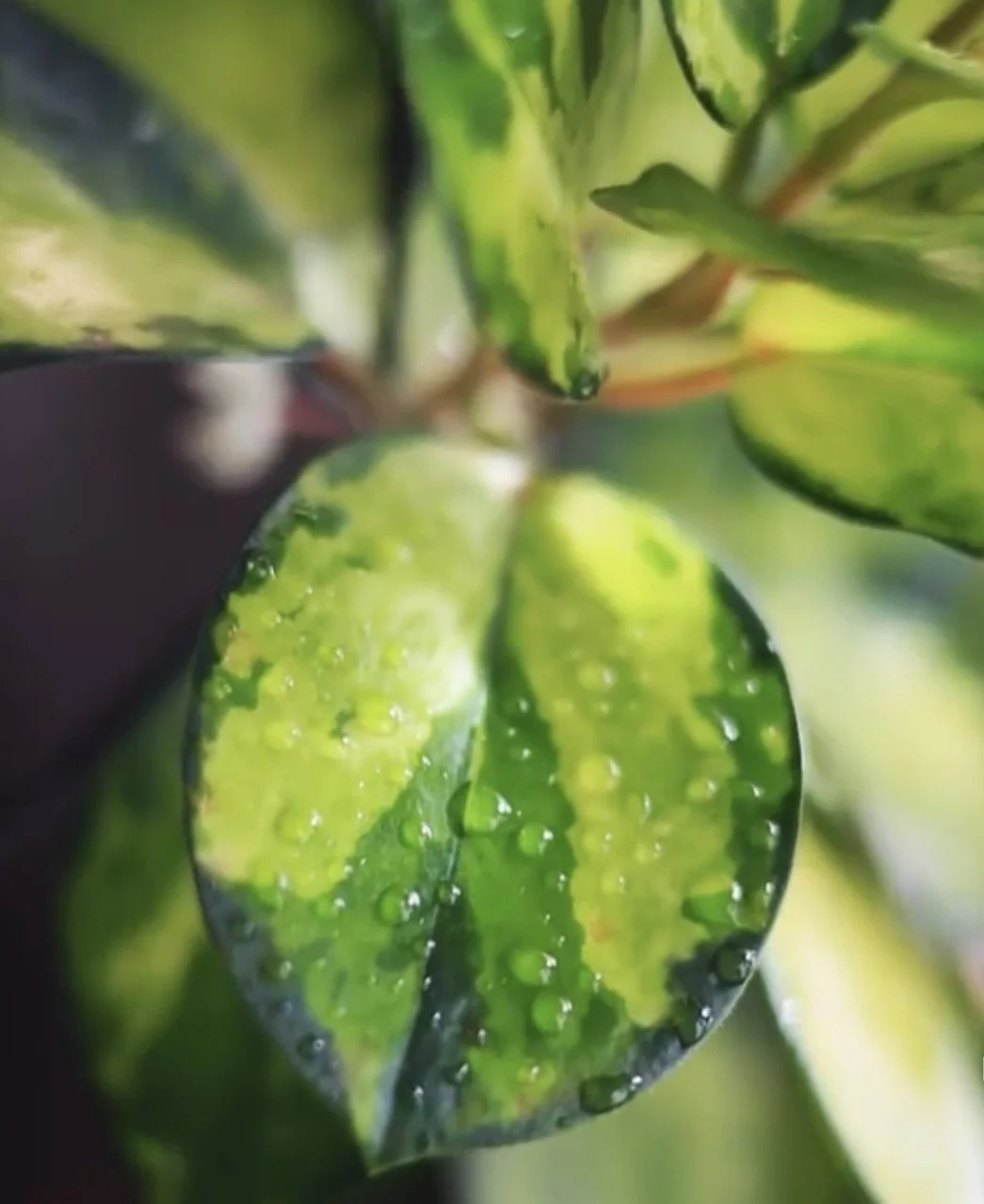
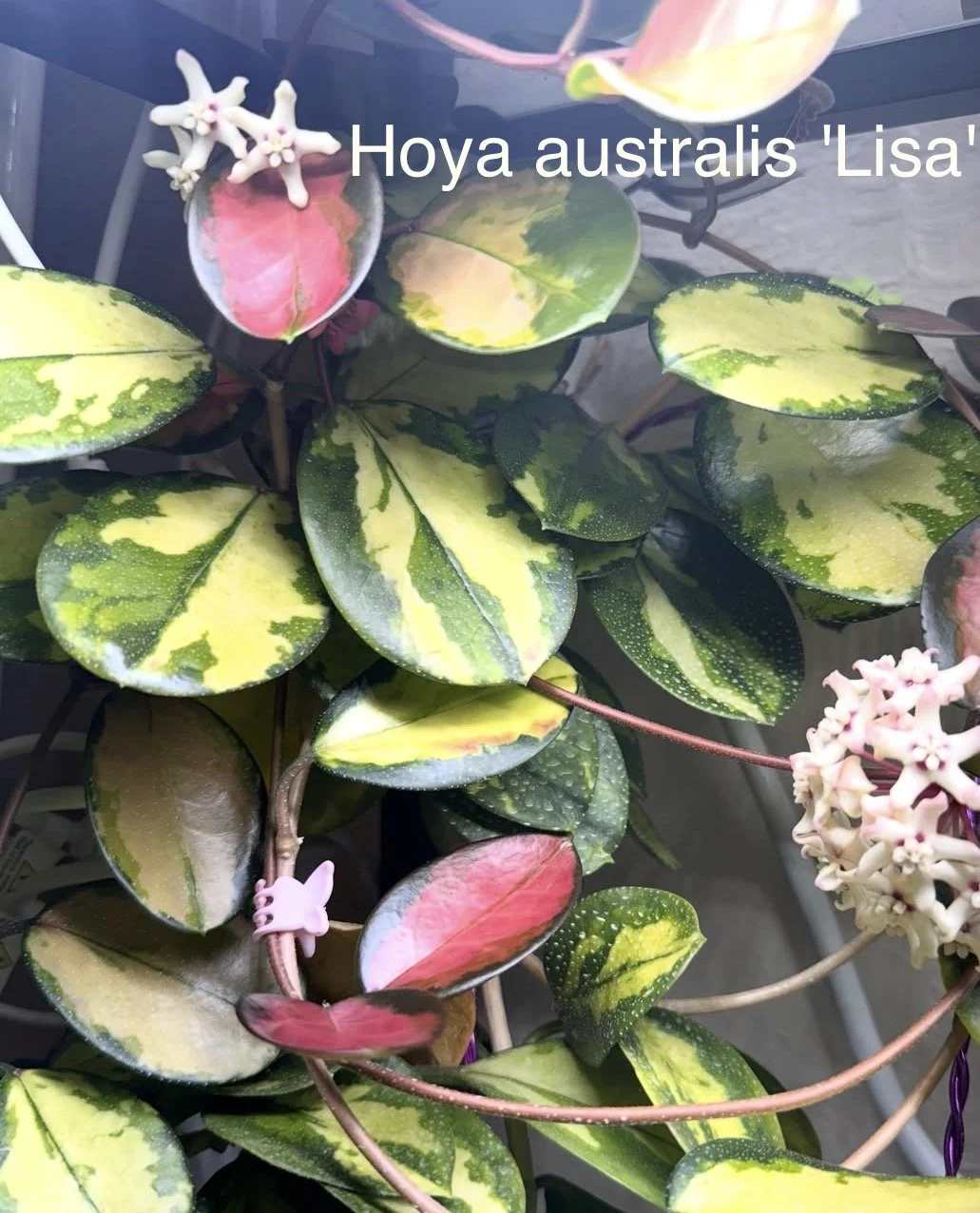
Hoya Bella ‘Lida Buis‘
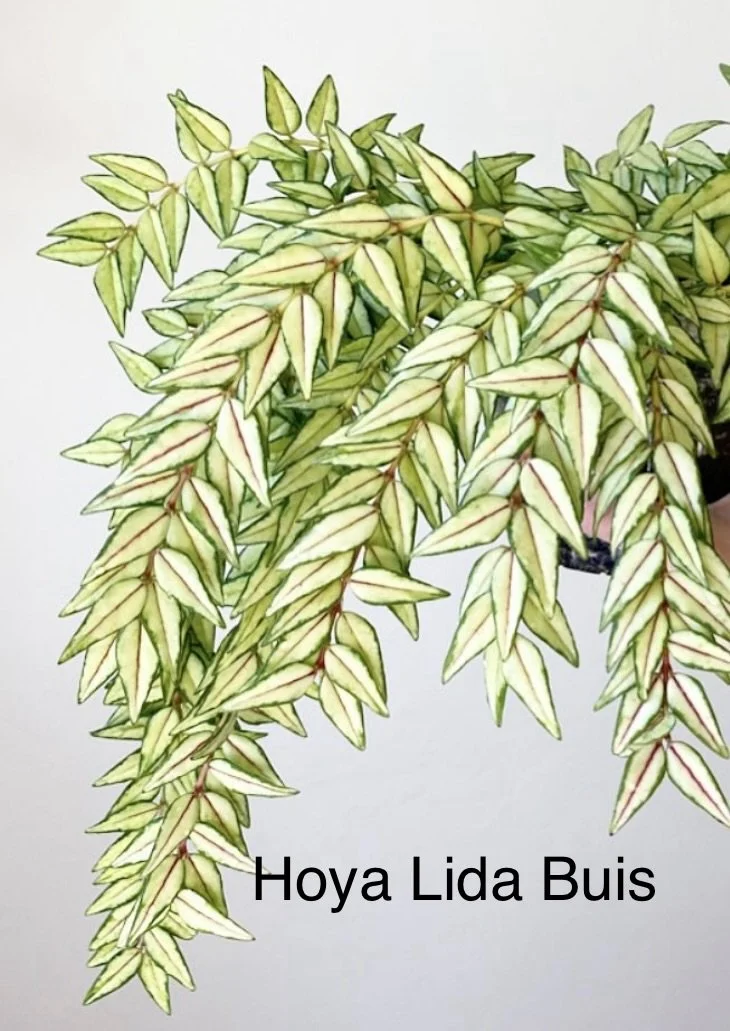
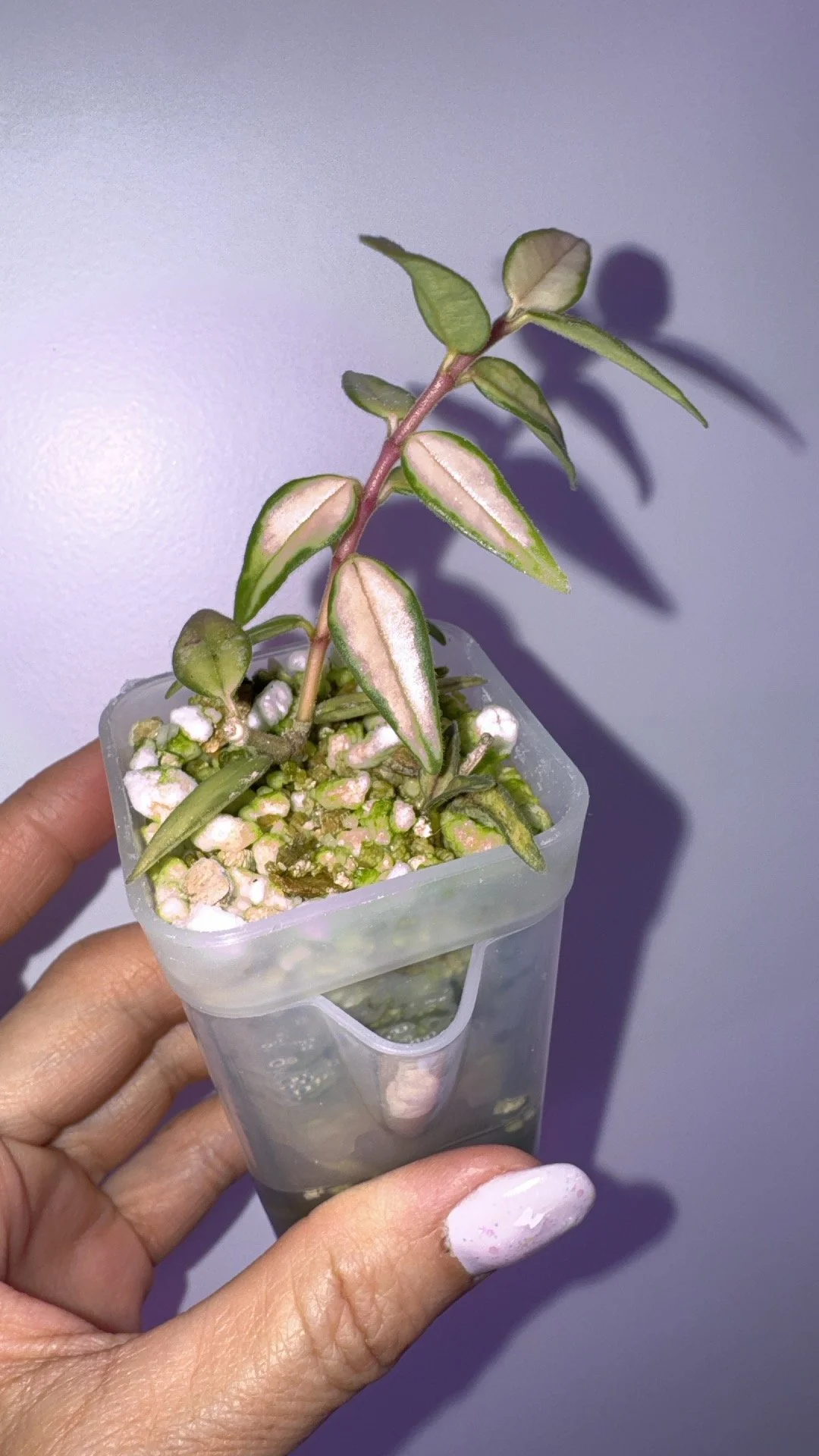
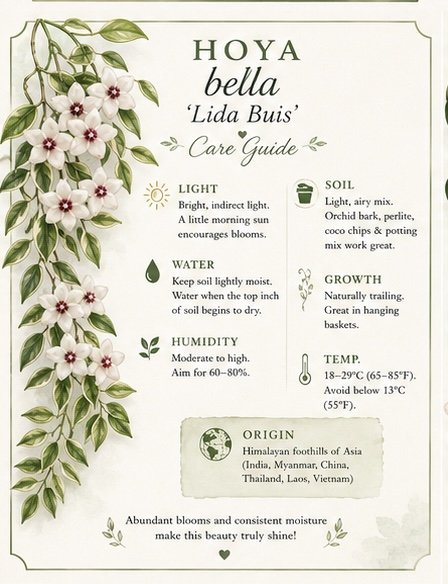
Hoya Bella ‘Lida Buis‘
Hoya bella ‘Lida Buis’ Care Guide
A Charming Cascading Hoya with Delicate Foliage and Abundant Blooms
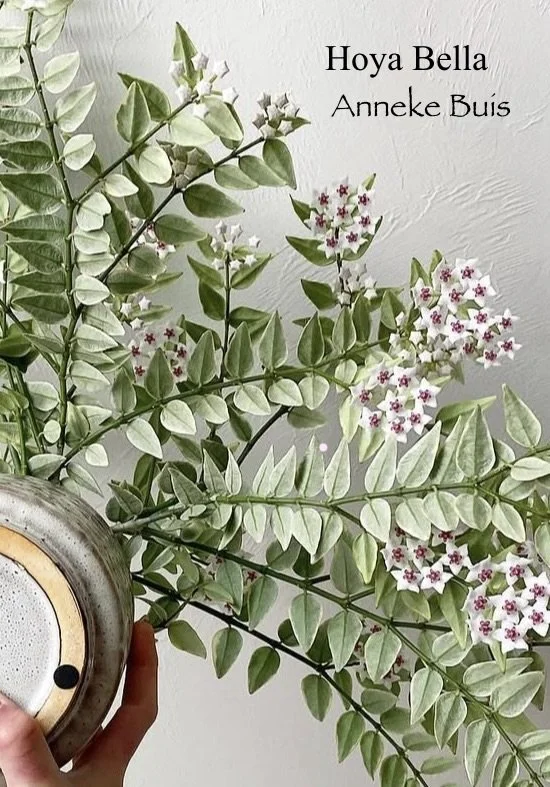
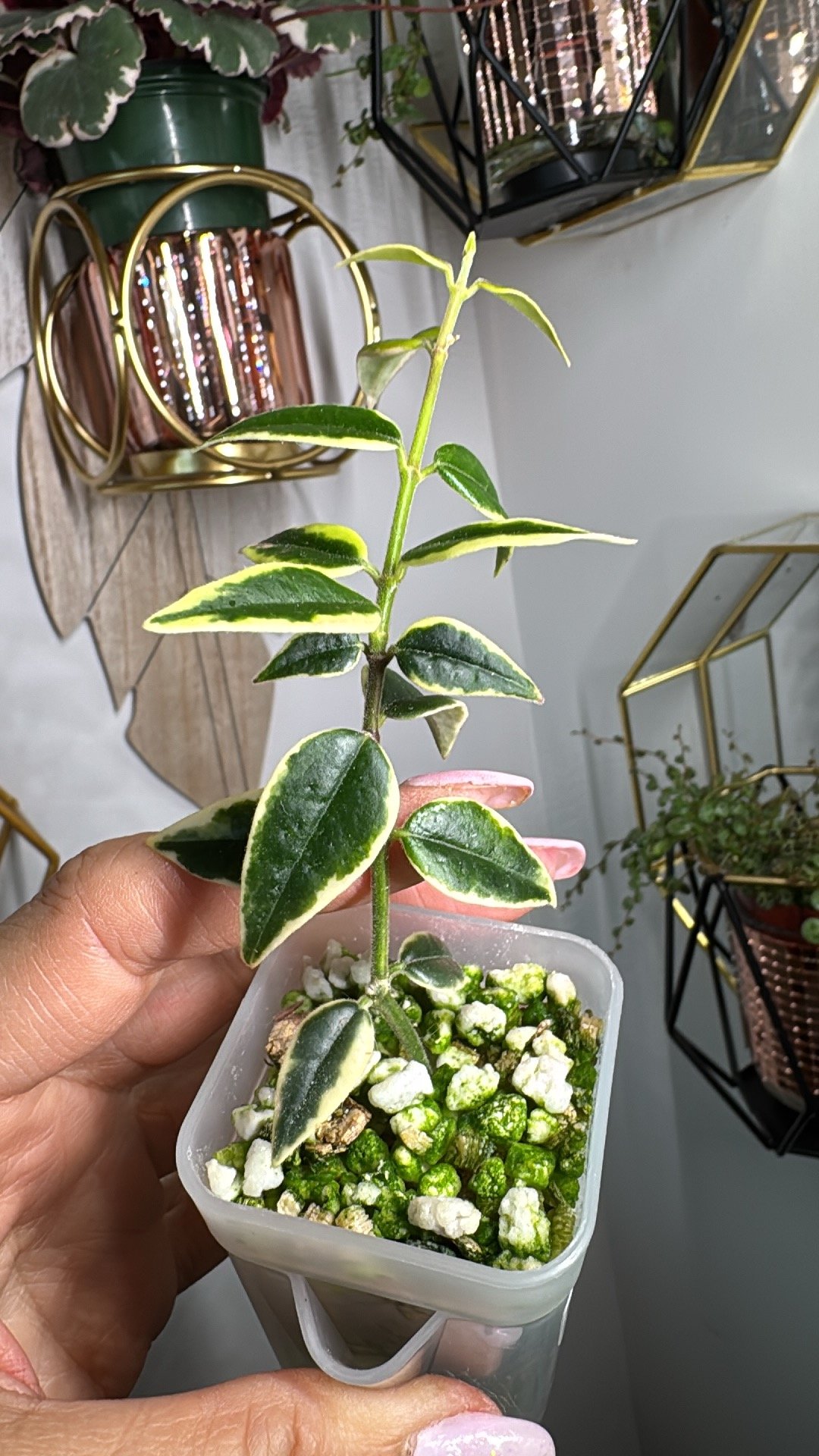
Hoya bella ‘Lida Buis’ is a beautiful cultivar of the beloved Hoya bella, treasured for its compact, cascading vines, elegant foliage, and profusion of porcelain-like flowers. Its naturally pendant growth makes it an outstanding choice for hanging baskets, plant shelves, or decorative containers where the vines can spill gracefully over the edges.
Like the species, Hoya bella is native to the Himalayan foothills and parts of Northeast India, Myanmar, southern China, Thailand, Laos, and Vietnam. It grows as an epiphyte in warm, humid forests, where it clings to tree branches in bright, filtered light. Frequent rainfall, excellent air circulation, and loose organic debris around the roots create the perfect growing conditions that we can easily recreate indoors.
Compared to many Hoyas with thick, succulent leaves, Hoya bella has finer foliage and roots, meaning it prefers slightly more consistent moisture while still requiring excellent drainage.
Light
Provide bright, indirect light throughout the day.
A few hours of gentle morning sun encourage compact growth and abundant flowering. Avoid intense afternoon sunlight, which can scorch the delicate leaves.
Watering
Allow only the top inch (2–3 cm) of the potting mix to dry before watering again.
Water thoroughly until excess moisture drains from the bottom of the pot, then allow the mix to drain completely. Unlike many thicker-leaved Hoyas, Hoya bella appreciates more consistent moisture and should not be allowed to remain dry for long periods.
Reduce watering slightly during winter when growth slows.
Soil
Use a light, airy potting mix that provides both moisture retention and excellent drainage.
A recommended mix includes:
Fine orchid bark
Perlite or pumice
Coco chips or coco coir
High-quality potting mix
This combination closely mimics the loose organic material surrounding its roots in nature.
Humidity
Hoya bella ‘Lida Buis’ thrives in 60–80% humidity.
While it adapts to average indoor conditions, higher humidity encourages fuller growth, healthier foliage, and more frequent blooming.
Temperature
Maintain temperatures between 18–29°C (65–85°F).
Avoid cold drafts and protect the plant from temperatures below 13°C (55°F).
Fertilizer
Feed once a month during spring and summer with a balanced liquid fertilizer diluted to half strength.
Regular feeding supports lush foliage and encourages repeated flowering throughout the growing season.
Growth Habit
This cultivar naturally develops graceful, cascading vines rather than climbing aggressively. It is particularly beautiful in hanging baskets where the stems can trail freely, although young plants may also be trained around a small hoop for an attractive display.
Repotting
Repot every two to three years or when the roots have filled the pot.
Hoyas generally perform best when slightly root-bound, so choose a pot only one size larger than the current container.
Flowering
One of the greatest joys of growing Hoya bella ‘Lida Buis’ is its spectacular display of blooms. The clusters of star-shaped, waxy white flowers feature vibrant pink to deep magenta centers and often produce a light, sweet fragrance.
Never remove old flower spurs (peduncles), as new flowers will continue to emerge from the same spurs year after year.
Common Problems
Yellow leaves
Usually caused by overwatering or poorly drained soil.
Wrinkled leaves
Often indicate the plant has become too dry or the roots are unable to absorb water properly.
Leaf drop
May occur if the plant experiences sudden temperature changes, prolonged drought, or cold drafts.
Poor flowering
Usually results from insufficient light or removing old flower spurs.
Hoya bella ‘Lida Buis’ is a delightful addition to any Hoya collection. Its cascading habit, refined foliage, and abundant clusters of delicate blooms make it a standout display plant. By providing bright filtered light, an airy potting mix, warm temperatures, moderate humidity, and consistent moisture, you’ll enjoy a healthy plant that rewards you with beautiful growth and flowers season after season.